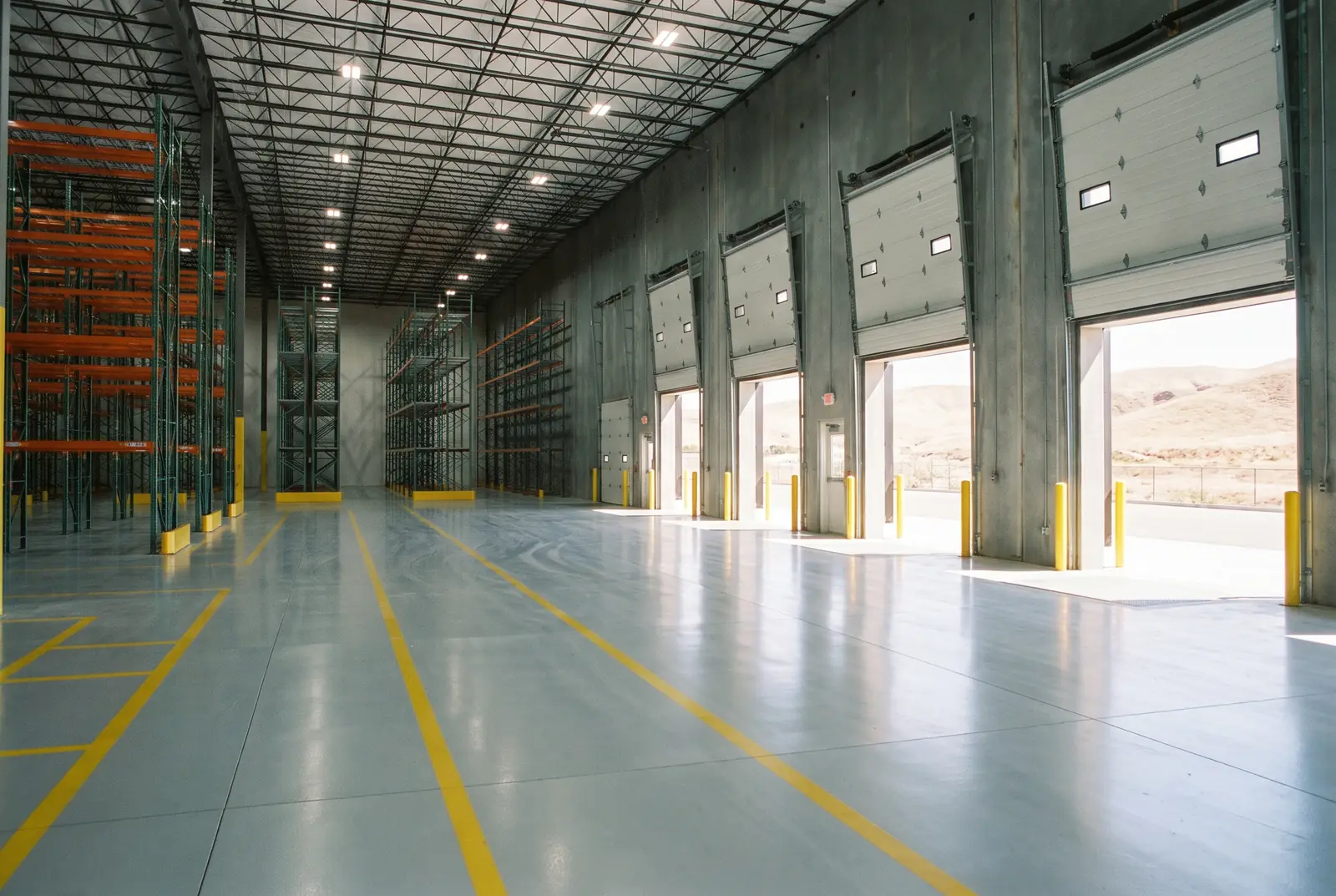
Floor coatings for warehouses, distribution centers, auto shops and commercial kitchens — scheduled around your shifts so the work does not stop the business.
Call (909) 550-6756 for a Free EstimateTell us about the floor. We reply the same working day to book a free on-site look.
Prefer to talk? Call (909) 550-6756
Commercial epoxy flooring in Fontana protects the concrete that keeps a business running, from distribution centers along the I-10 to auto shops and food prep areas. A coated floor is easier to clean, brighter under high-bay lights and safer with marked lanes and grip where people walk. We plan each job around your hours so operations keep moving.
A commercial epoxy install starts with a walk-through to map traffic, chemicals, drains and any areas that cannot shut down. From there we set a phased schedule, often nights or weekends.
The concrete is prepared with ride-on or walk-behind diamond grinders or a shot blaster, then cracks are repaired and control joints are filled with a semi-rigid filler that supports hard forklift wheels.
High-build epoxy coats go down next, followed by a topcoat matched to the use: chemical resistant for shops, anti-slip for wet areas, or urethane cement for kitchens that see hot washdowns. Safety lanes and markings finish the job.
Forklift traffic grinds bare concrete into fine dust that settles on product and racking.
Wheels hitting open control joints chip the edges, which grows into a rough, jarring path for equipment.
Worn walkway and forklift lane markings are a safety problem and an inspection issue.
Auto shops and maintenance bays need a floor that chemicals cannot soak into.
Kitchens and food processing areas need a seamless floor that drains and cleans fully.
A fresh coating is a fast way to bring a building up for a new tenant or buyer.
Commercial floors fail faster because they take far more weight and abuse than a home garage. Hard polyurethane forklift wheels, pallet jacks and dragged pallets put heavy point loads on the coating thousands of times a week.
Open control joints are the most common weak spot. Without a proper filler, the joint edges chip and the coating breaks along the line. Chemical spills, hot washdowns and standing water add their own stress.
The answer is matching the system to the real use: a thicker build, filled joints, the right topcoat for chemicals or heat, and an inspection plan for high-traffic aisles.
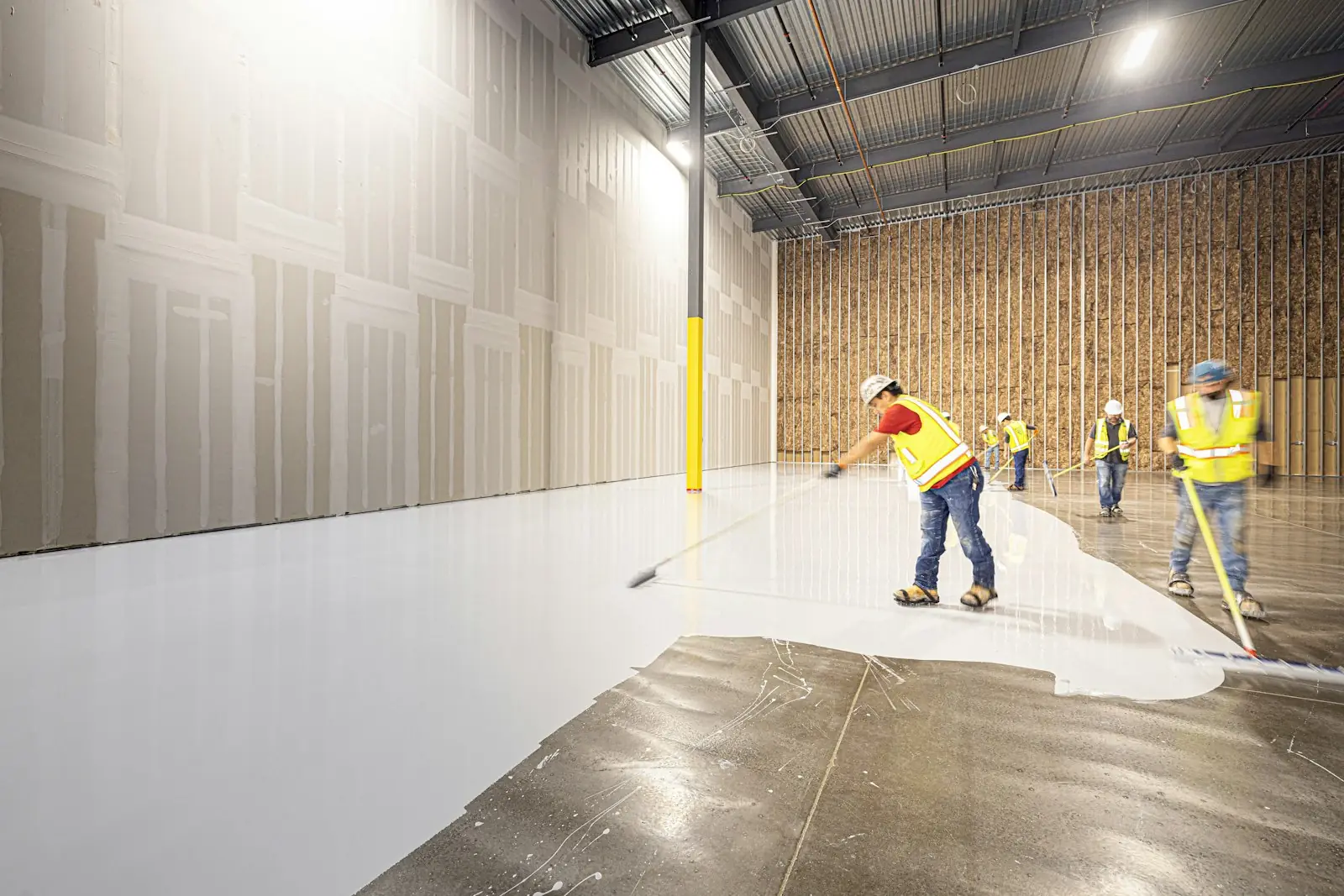
The cost of commercial epoxy flooring depends on square footage, the condition of the concrete, the coating system and the schedule. A large open warehouse floor and a small kitchen with drains and cove base are very different jobs.
Joint filling, crack repair, moisture mitigation, line striping and night or weekend work all affect the final number. Floors exposed to chemicals or thermal shock need a heavier system than dry storage areas.
We walk the space with you and give a written proposal with the scope and schedule spelled out, at no charge. Call (909) 550-6756 or send details through the commercial estimate request form.
Both are common in warehouses and retail. The right one depends on spills, cleaning and the look you want.
| Epoxy coating | Polished concrete | |
|---|---|---|
| Spill and stain protection | Seals the slab completely | Densified, but can still stain |
| Colors and markings | Any color, lanes built in | Concrete tones, striping added |
| Slip resistance | Adjustable with grit | Depends on polish level |
| Upkeep | Recoat high-traffic lanes over time | Periodic re-burnishing |
| Best for | Shops, kitchens, chemical areas, marked warehouses | Dry storage, retail floors |
Many facilities mix both: polished concrete in dry storage aisles and epoxy in maintenance bays, battery charging areas and break rooms. For home projects, see our garage floor epoxy service.
Yes, most warehouse floor coatings are done in phases. We section off areas and work nights or weekends so the rest of the building keeps running, and fast-curing products can return an area to service quickly.
A commercial epoxy floor often lasts many years when the system is matched to the traffic and joints are filled correctly. High-traffic aisles may need a fresh topcoat sooner than low-traffic areas.
Yes, forklift lanes, walkways, hazard zones and parking stripes can be built into the coating in any standard safety color. Markings applied as part of the system last longer than paint applied over bare concrete.
Urethane cement is usually the best floor coating for a commercial kitchen because it handles hot water, grease and temperature swings. It can be finished with an anti-slip texture and a cove base for easy cleaning.
Call to schedule a free walk-through. We map the traffic, check the slab and send a written scope and schedule.
Call (909) 550-6756 Now